Saint Lucia: parrots, rainforest and the Pitons
Not the former Mot Mot Travel tour company - we don't sell holidays.
Quick answer: Saint Lucia is a small volcanic island with its own parrot, a handful of endemic songbirds and a World Heritage landscape around the Pitons. Most birdwatching happens in the forest reserves of the central mountains, best early in the morning. The driest, busiest months are December to April.
The Saint Lucia parrot (Jacquot) and where to look
The Saint Lucia parrot, or Jacquot (Amazona versicolor), lives only on Saint Lucia and became the national bird in 1979. It is mainly green, with a cobalt-blue forehead that shades through turquoise to green on the cheeks, and a scarlet breast.
BirdLife International lists it as Vulnerable, with an increasing population: about 350 to 500 birds in 1996 and an estimated 1,750 to 2,250 in 2009. The government still describes the parrot as endangered and asks visitors to help protect it. BirdLife credits concerted conservation work, including education campaigns that made it a national symbol, with reversing earlier declines.
The parrot feeds in the canopy of moist mountain forest, mainly between 500 and 900 metres. The Ministry of Agriculture describes a "definite possibility" of seeing it on the 4 km Des Cartiers Rainforest trail, inland from the east coast near Mahaut.
Endemic birds of Saint Lucia
The Ministry of Agriculture's page for the Millet Bird Sanctuary trail lists more than 30 bird species, including five endemics: the Saint Lucia black finch, parrot, warbler, oriole and pewee. BirdLife's list differs slightly and also includes Semper's warbler, a Critically Endangered species.
- Saint Lucia oriole: black and yellow, found across the island but fond of moist highland forest. BirdLife lists it as Endangered.
- Saint Lucia black finch: the male is all black with pink legs, and it feeds on the ground in dense undergrowth. BirdLife lists it as Endangered.
- Saint Lucia warbler: small and quick, and often heard before it is seen.
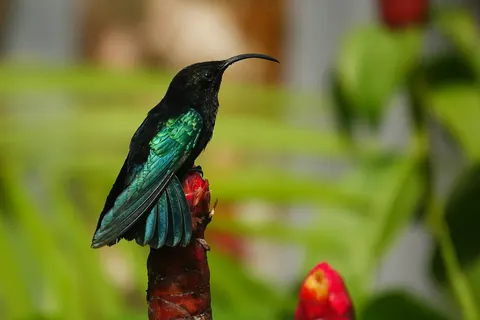
Look out, too, for the white-breasted thrasher, an Endangered bird that lives only on Saint Lucia and Martinique. On Saint Lucia it keeps to dry woodland on the north-east coast. For tips that work on every island, read our Caribbean birdwatching guide.
Rainforest reserves and trails
The Saint Lucia Tourism Authority says most birding happens in the central rainforest reserve, where endemic birds are most concentrated. Its list of birdwatching sites includes:
- Millet Bird Sanctuary, in the heart of the island
- Des Cartiers Rainforest Trail
- Edmund National Rainforest
- Gros Piton Nature Trail
- The Foresterie Trail
- Vieux Fort wetlands, Dennery and Praslin, Grande Anse and the Maria Islands Nature Reserve
The board recommends guided tours for finding the endemics, and early morning or late afternoon for the best activity. For longer walks, see our rainforest hiking guide.
The Pitons: views and hikes
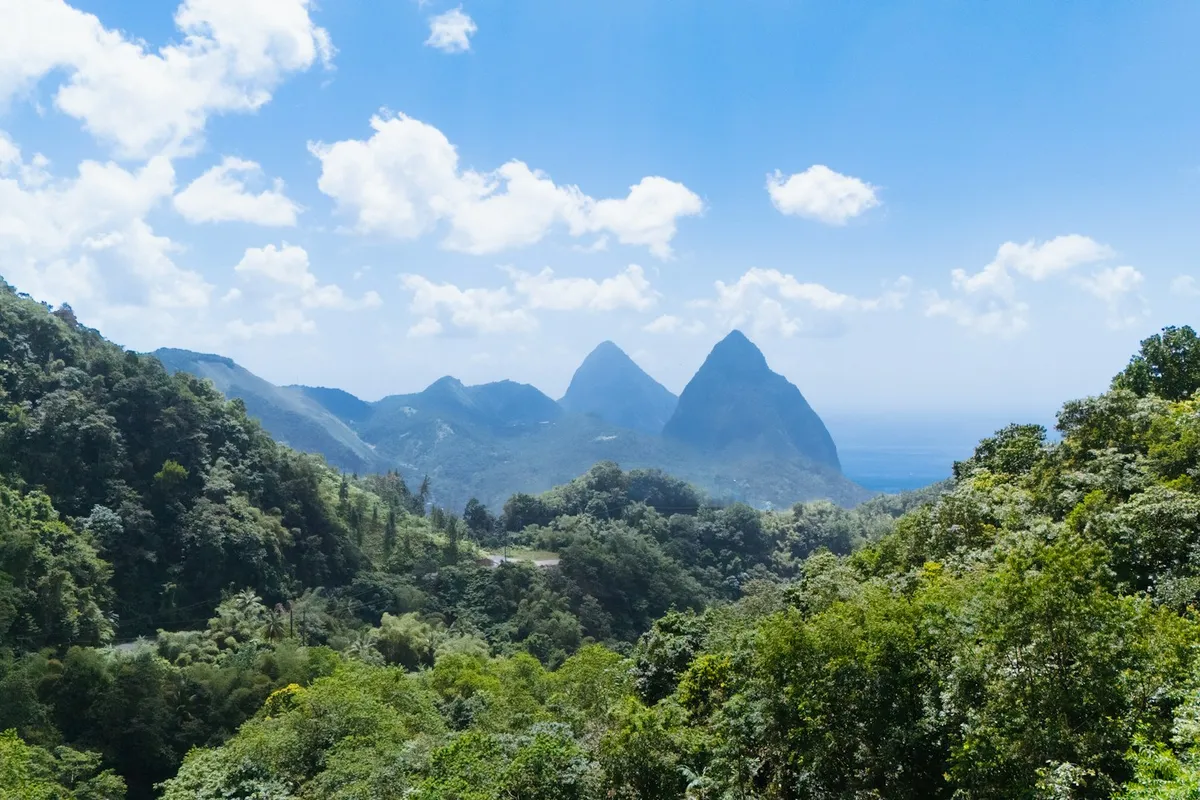
The Pitons are two volcanic spires rising side by side from the sea near Soufrière, linked by the Piton Mitan ridge. The Pitons Management Area became a UNESCO World Heritage Site in 2004 and covers 2,909 hectares of land and sea. According to IUCN, Gros Piton holds some 27 bird species, five of them endemic, and coral reefs cover almost 60% of the marine area.
IUCN rates the site's conservation outlook as "significant concern" (2025), mainly because of tourism and housing development. Stay on paths and leave the reefs untouched.
Gros Piton is a 4 km round-trip hike of four to six hours, and a certified local guide is required. Petit Piton is a steep, very challenging scramble, and a professional guide is mandatory.
Whales and dolphins offshore
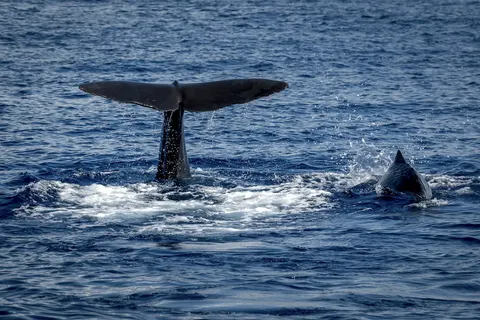
The tourism authority says dolphins and pilot whales can be seen all year, and humpback whales pass through between February and April. Its species list includes spinner, bottlenose and pantropical spotted dolphins, with sperm whales occasionally seen in deeper water.
No trip can promise a sighting, as it depends on the weather, the season and the animals' movements. Choose a boat that follows the official distance guidelines, limits time near the animals and never feeds or touches them.
Best time to visit St Lucia
The tourism authority calls December to April the busiest time and the driest season. The rainy season runs from June to December, with more rain in the rainforest than on the coast, and it overlaps the hurricane season. The US National Hurricane Center gives the Atlantic hurricane season as 1 June to 30 November.
For UK travellers, the dry season covers Christmas, February half-term and the Easter holidays. The tourism authority also says the dry months, December to May, make forest trails easier to walk.
Getting there from the UK and where to base yourself
The island has two airports: Hewanorra International and George F.L. Charles. The tourism authority announced a daily direct service from London Gatwick to Hewanorra from 25 October 2026; check current schedules before you plan.
Saint Lucia keeps Atlantic Standard Time all year and does not change its clocks. That puts it four hours behind the UK in winter and five during British Summer Time.
Good bases, by area:
- Around Soufrière for the Pitons, Gros Piton trails and reefs.
- The interior and east side for Millet, Des Cartiers and the other forest reserves.
Hopping between islands? Dominica has two parrots of its own.
Watch wildlife responsibly
- Keep your distance from birds, nests and marine animals, and limit recorded bird calls.
- Stay on marked trails, especially in the forest reserves and the Pitons.
- Never feed or touch wildlife.
- Use the certified guides required on the Piton trails.
Sources
All pages opened on 20 October 2026.
- Government of Saint Lucia: National bird
- Ministry of Agriculture (Forestry): Des Cartiers Rainforest; Millet Bird Sanctuary
- BirdLife International DataZone: St Lucia country profile; species Saint Lucia amazon, Saint Lucia oriole, Saint Lucia black finch, White-breasted thrasher (data read through the DataZone API)
- IUCN World Heritage Outlook: Pitons Management Area
- Saint Lucia Tourism Authority: Birdwatching; Whale and dolphin watching; Piton climbs; Travel seasons and weather; Plan your trip; Press release, 18 March 2026
- US National Hurricane Center: Tropical cyclone climatology
- GOV.UK: St Lucia travel advice; When do the clocks change?
Frequently asked questions
Where can you see the St Lucia parrot?
In the moist mountain forests of the island's centre. The Des Cartiers Rainforest trail and the Millet Bird Sanctuary are both good places to look. Go early in the morning with a local guide.
What is the national bird of St Lucia?
The Saint Lucia parrot (Amazona versicolor), known locally as Jacquot. It was declared the national bird in 1979 and lives nowhere else.
Can you go whale watching in St Lucia?
Yes. Dolphins and pilot whales are seen all year, and humpback whales pass through between February and April. Sightings are never guaranteed.
When is the best time to visit St Lucia from the UK?
December to April is the driest season, which suits Christmas, February half-term and Easter trips. The rainy season runs from June to December and overlaps the hurricane season (1 June to 30 November).
Do UK passport holders need a visa for St Lucia?
We don't state entry rules ourselves, because they can change. Check the GOV.UK FCDO entry requirements page for St Lucia before you book; the same advice covers safety and security.