Birdwatching in the Caribbean: where to start
Not the former Mot Mot Travel tour company - we don't sell holidays.
Quick answer: Start with Trinidad and Tobago if you want lots of species in a short trip, or with Jamaica, Saint Lucia or Dominica if you want birds that live nowhere else. The dry months, roughly December to May, are the easiest for walking trails. Bring binoculars, a free ID app and a local guide's phone number.
Which Caribbean island is best for birdwatching?
It depends on what you want to see. BirdsCaribbean, a regional bird conservation organisation, says the Caribbean has more than 700 bird species. Of these, 187 are endemic to the region, and more than 110 live on just one island.
That is why each island feels different. BirdLife International's country lists show the contrast:
| Island | Bird species (BirdLife list) | Endemic species | Endemics to look for | |---|---|---|---| | Trinidad and Tobago | 392 | 3 | Trinidad motmot, Tobago greenlet | | Cuba | 295 | 28 | Bee hummingbird, Cuban tody, Cuban trogon | | Jamaica | 208 | 32 | Jamaican tody, red-billed streamertail, Jamaican owl | | Dominica | 179 | 3 | Imperial amazon (Sisserou), red-necked amazon | | Saint Lucia | 172 | 5 | Saint Lucia parrot, oriole, black finch | | Grenada | 115 | 1 | Grenada dove |
Lists include migrants and seabirds, and checklists split species differently, so local counts can vary.
Endemic birds: why each island is different
BirdsCaribbean says about half of the region's resident birds are endemic. So even close neighbours can have different birds: Saint Lucia and Dominica, for example, each have parrots found nowhere else.
Many endemics are rare. BirdLife lists the Grenada dove and Dominica's imperial amazon as Critically Endangered, and the Saint Lucia oriole and black finch as Endangered. Seeing them is a privilege, so give them space.
Trinidad and Tobago: an easy first trip
Trinidad and Tobago has the longest bird list in the table, with many South American species. You can watch scarlet ibis fly in to roost at Caroni Swamp, look for oilbirds in the Northern Range and visit seabird colonies on Little Tobago. Read our full Trinidad and Tobago guide.
Parrots of Saint Lucia, Dominica and Grenada's dove
Several Lesser Antilles islands have a parrot of their own. The Saint Lucia parrot is listed as Vulnerable, but BirdLife reports that its numbers are increasing. See our Saint Lucia guide.
Dominica has two: the imperial amazon, or Sisserou, and the red-necked amazon, or Jaco. Both live only on Dominica, and our Dominica guide explains where to look. Grenada's own endemic, the Grenada dove, is Critically Endangered and still declining.
These islands are close neighbours, so you can combine two or three in one trip. Dominica's tourism authority lists connections through Martinique, Guadeloupe, Antigua and Barbados.
Jamaica's endemics
BirdLife counts 32 endemic species in Jamaica, the most of any island in the table. They include the Jamaican tody, two streamertail hummingbirds, the Jamaican owl and two parrots. Our Jamaica guide covers where to find them.
Hummingbirds and where to see them
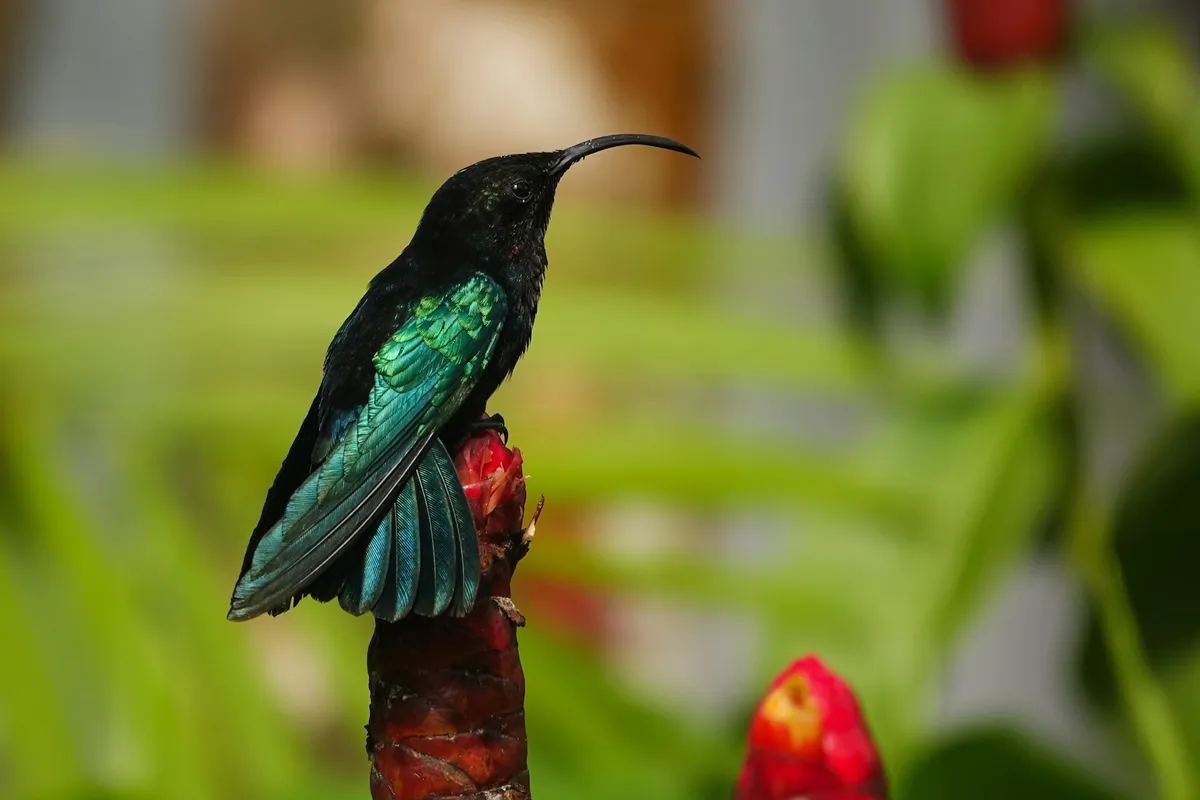
BirdLife's list for Trinidad and Tobago includes 18 hummingbird species, and Visit Tobago counts six in Tobago's highland forest. In the Lesser Antilles, look for the purple-throated carib, green-throated carib and Antillean crested hummingbird. BirdLife lists all three among the key birds of Dominica's national parks.
Garden flowers and forest edges are good places to start. On Saint Lucia, the tourism authority notes that Antillean crested hummingbirds often visit gardens and open areas.
Best time to go birdwatching in the Caribbean
The tourism boards give similar dry seasons: December to April on Saint Lucia and January to May in Trinidad and Tobago. For UK travellers, that covers Christmas, February half-term and Easter.
BirdsCaribbean says more than 180 migratory species winter in the region after breeding in North America. From 22 April to 22 May, its Caribbean Endemic Bird Festival celebrates island birds with local events.
The Atlantic hurricane season runs from 1 June to 30 November, according to the US National Hurricane Center. Whatever the month, go out early in the morning or late in the afternoon, the best times according to Saint Lucia's tourism authority.
What to pack: binoculars, field guide and apps
- Binoculars: a light, waterproof pair you can hold steady for a long time.
- A regional field guide or app: the Cornell Lab's Merlin Bird ID is free and covers more than 10,000 species. You can download a region for offline use before you fly.
- eBird: its Explore Hotspots tool lists more than 450,000 birding sites worldwide, suggested by other birders.
- Rain jacket, sun hat, water and insect repellent, plus shoes with good grip for muddy trails.
Merlin's Sound ID is most precise for birds of the US, Canada and Europe and may be less precise in remote regions, so check identifications with your guide.
Local guides and birding etiquette
A local guide knows the calls, the trails and the best fruiting trees. On some trails a guide is required: Saint Lucia's Gros Piton needs a certified local guide, and Dominica's Boiling Lake trail must be hiked with a licensed one. Ask the national tourism board or park authority for a list of licensed guides.
Follow the American Birding Association's Code of Birding Ethics:
- Keep your distance, and take extra care around nests, roosts and colonies.
- Stay on trails and never enter private land without permission.
- Limit recorded bird calls, especially at busy sites.
- Never feed wildlife.
Going further: Costa Rica, Panama, Colombia and Guyana
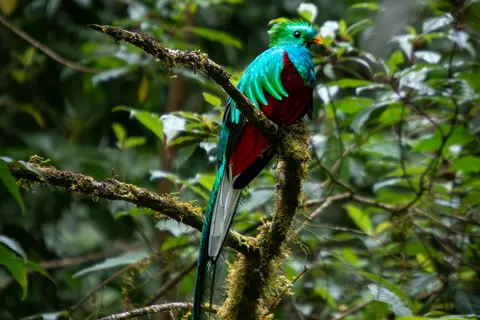
For even bigger lists, head to the mainland. Visit Costa Rica puts the country's bird list at almost 900 species, and BirdLife counts six motmot species there. Start with our Costa Rica guide, then look at Panama, Colombia and Guyana.
Sources
All pages opened on 20 October 2026.
- BirdsCaribbean: Caribbean birds; Caribbean Endemic Bird Festival
- BirdLife International DataZone country profiles: Trinidad and Tobago, Cuba, Jamaica, Dominica, St Lucia, Grenada, Costa Rica; species Grenada dove; IBA Morne Trois Pitons National Park (data read through the DataZone API)
- Cornell Lab eBird Help Center: Merlin Bird ID FAQs; Merlin bird packs; Explore eBird hotspots
- American Birding Association: Code of Birding Ethics
- Tourism boards: Saint Lucia birdwatching, Saint Lucia seasons, Piton climbs, Saint Lucia press release, 18 March 2026; Visit Trinidad travel tips; Visit Tobago Main Ridge trails and Getting to Tobago; Discover Dominica Boiling Lake and Arriving by air; Visit Costa Rica birdwatching
- Trinidad and Tobago Ministry of Agriculture: Sea turtle nesting season 2026
- US National Hurricane Center: Tropical cyclone climatology
- GOV.UK: Foreign travel advice
Frequently asked questions
Which Caribbean island is best for birdwatching?
For the most species in one trip, Trinidad and Tobago: BirdLife lists 392. For endemic birds, Jamaica has the most (32), and Saint Lucia and Dominica each have their own parrots.
best caribbean island for birdwatching in may?
Trinidad and Tobago is a good choice: its dry season runs to the end of May, and its turtle nesting season (1 March to 31 August) is under way. Across the region, the Caribbean Endemic Bird Festival runs from 22 April to 22 May.
Do I need a local guide for birding in the Caribbean?
Not everywhere, but a guide will find far more birds, and some trails require one, such as Gros Piton and the Boiling Lake. Ask the national tourism board or park authority for licensed guides.
Can I fly direct from the UK to a Caribbean birding island?
Yes, to some. Saint Lucia's tourism authority announced a daily London Gatwick service from 25 October 2026, and Tobago's lists a weekly Gatwick flight. Dominica needs a connection through a regional hub.
Do I need a visa for the Caribbean from the UK?
Each country sets its own rules, and we don't state them ourselves. Check the entry requirements for your country on GOV.UK FCDO foreign travel advice before you book.