Jamaica: endemic birds and the Blue Mountains
Not the former Mot Mot Travel tour company - we don't sell holidays.
Quick answer: Jamaica is one of the best Caribbean islands for birds found nowhere else. BirdLife International lists 208 bird species for the country, and 32 of them breed only in Jamaica, including the doctor bird, the national bird. The best birding is in the Blue and John Crow Mountains and Cockpit Country, and December to April is the driest time for mountain walks.
Jamaica's endemic birds
BirdLife's list of 32 endemics includes the Jamaican tody, a tiny emerald-green bird with a red throat, the Jamaican owl and two parrots: the black-billed and yellow-billed amazons. Of Jamaica's 17 Important Bird Areas, the Blue Mountains, the John Crow Mountains and Cockpit Country each hold more than 30 qualifying species, most of them endemics.
BirdLife lists the Jamaican blackbird and the black-billed amazon as Endangered, and the Jamaican petrel and Jamaican poorwill as Critically Endangered and possibly extinct. New to tropical birds? Start with our Caribbean birdwatching guide.
The doctor bird (red-billed streamertail)
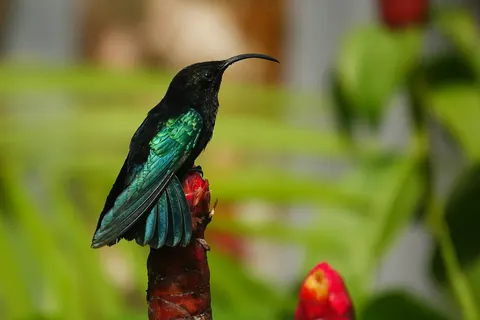
The doctor bird is Jamaica's national bird and lives only in Jamaica. The tourist board identifies it as the red-billed streamertail (Trochilus polytmus), and the adult male trails two long black tail streamers in flight. The Jamaica Information Service says the name may come from its black crest and tail, which recall the top hats and tailcoats doctors once wore.
You don't need deep forest to find one: the tourist board says doctor birds live in gardens and forest across the island, especially in the Blue Mountains. In the far east, BirdLife lists the black-billed streamertail for the John Crow Mountains instead, and treats the two as separate species.
The Blue and John Crow Mountains
The national park covers about 41,200 hectares of eastern Jamaica and became a UNESCO World Heritage Site in 2015 for both its nature and its culture. The mountains sheltered Maroon communities, whose old trails form the Nanny Town Heritage Route. The Jamaica Conservation and Development Trust manages the park for the government.
The trust says montane cloud forest grows above about 1,000 metres, and that in Jamaica it exists only in the Blue Mountains. IUCN reports that about half of the flowering plants at that height are endemic, and that more than 170 species of migrant birds winter here.
Look for the Jamaican blackbird, which BirdLife says feeds among bromeliads and mosses in wet mountain forest, and the Blue Mountain vireo. The park is also one of two homes of the Jamaican swallowtail, which IUCN calls the largest butterfly in the Western Hemisphere. At Holywell Recreation Area, guided walks such as the 1.2 km Oatley Mountain Trail pass through primary forest to lookouts.
Cockpit Country
BirdLife describes Cockpit Country, in west-central Jamaica, as the world's reference site for cockpit karst, a landscape of forested limestone hills. Its forest reserve is the largest unbroken block of wet limestone forest left on the island, and Jamaica's two largest rivers, the Black River and the Great River, rise here.
It is a stronghold for both parrots, which nest in tree holes from March to August, and the Jamaican blackbird lives here at low densities. The tourist board adds the Jamaican swallowtail and the Jamaican hutia, a mammal found only in Jamaica.
In November 2017 the government announced a Cockpit Country Protected Area of about 74,726 hectares. Surface water is scarce, so go with a local guide and carry plenty of water.
Hiking Blue Mountain Peak
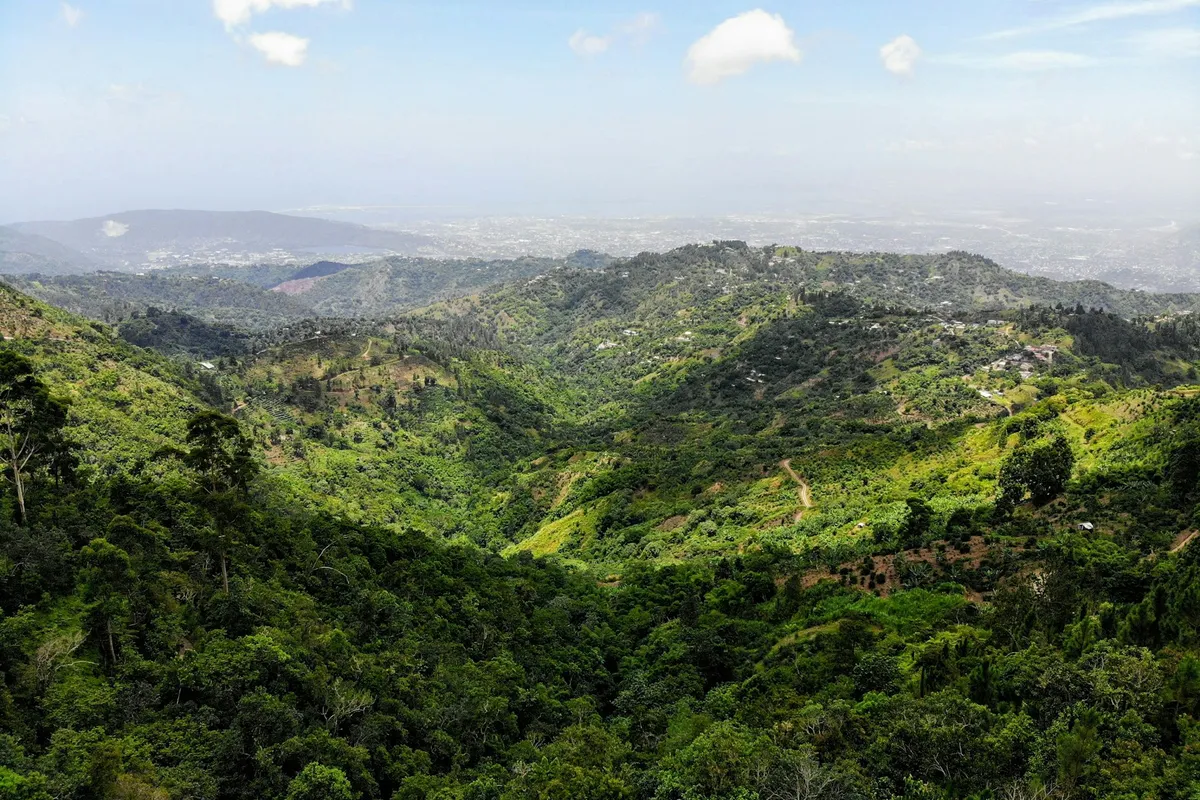
Blue Mountain Peak is Jamaica's highest point, at 2,256 metres (7,402 feet). The tourist board describes a seven-mile climb from a trailhead reached by four-wheel drive, and about seven hours for the full 14-mile hike.
Many hikers set off at about 2am to reach the top for sunrise, though you can walk in daylight. On a clear day you might see Cuba, about 90 miles north. The summit is often windy and misty, so pack warm layers, rain gear, a torch and water; for more walks, see our rainforest hiking guide.
Best time to visit Jamaica
The Jamaica Tourist Board names two rainy seasons, May to June and September to November, and calls December to April the best time to hike in the Blue Mountains. For UK travellers, that dry window takes in Christmas, February half-term and Easter, when migrant birds are also wintering here. The Atlantic hurricane season runs from 1 June to 30 November, according to the US National Hurricane Center.
Hurricane Melissa made landfall as a major hurricane in October 2025, and GOV.UK says the western parishes suffered significant damage. The Forestry Department's early assessment found damage to 51% of Jamaica's forests and expects recovery to take about five years. Check trail and site conditions locally before you go.
Getting there from the UK
Jamaica's international airports are at Montego Bay, Kingston and near Ocho Rios. For summer 2026, the Jamaica Tourist Board listed direct flights from London Gatwick, London Heathrow, Manchester and Birmingham to Montego Bay and Kingston; check current schedules before you plan.
Jamaica keeps UTC-5 all year and does not change its clocks: five hours behind the UK in winter and six during British Summer Time. Planning a two-island trip? Our Saint Lucia guide has a different set of endemic birds, including its own parrot.
Watch wildlife responsibly
- Keep your distance from nests and roosts, especially parrots in the March to August breeding season.
- Stay on marked trails in the national park and Cockpit Country, and go with a local guide.
- Never feed wildlife, and limit recorded bird calls (American Birding Association code).
- Leave plants, bromeliads and butterflies where you find them, and take your litter home.
Sources
All pages opened on 20 October 2026.
- BirdLife International DataZone: Jamaica country profile; Important Bird Areas Blue Mountains, John Crow Mountains and Cockpit Country; species Red-billed streamertail, Black-billed streamertail, Jamaican blackbird, Black-billed amazon and Yellow-billed amazon (data read through the DataZone API)
- IUCN World Heritage Outlook: Blue and John Crow Mountains
- Jamaica Conservation and Development Trust (park manager): Park overview; Natural heritage
- Jamaica Tourist Board (Visit Jamaica): Animals and wildlife; Travel FAQ; Airports in Jamaica; Hiking the Blue Mountain Peak; Five nature hikes at Holywell; Summer 2026 seats from the UK and Europe (press release, 6 March 2026)
- Jamaica Information Service: The doctor bird; Cockpit Country boundary named (22 November 2017)
- Forestry Department: The scarred canopy: Hurricane Melissa's impact on Jamaica's forests (4 December 2025)
- US National Hurricane Center: Tropical cyclone climatology
- GOV.UK: Jamaica travel advice; When do the clocks change?
- American Birding Association: Code of Birding Ethics
Frequently asked questions
How many endemic birds does Jamaica have?
BirdLife International lists 32, including two that may already be extinct. Other lists can differ, because experts don't always agree where one species ends and the next begins; BirdLife, for example, counts the red-billed and black-billed streamertails as two species.
Why is the doctor bird Jamaica's national bird?
The Jamaica Information Service gives no single reason, but it calls the doctor bird one of the most outstanding hummingbirds and notes that it lives only in Jamaica.
When is the best time to visit Jamaica from the UK?
December to April, the dry season, suits Christmas, February half-term and Easter trips, and the tourist board calls it the best time to hike in the Blue Mountains. The hurricane season runs from 1 June to 30 November.
Can you fly direct to Jamaica from the UK?
Yes. The Jamaica Tourist Board listed direct summer 2026 flights from London, Manchester and Birmingham. Schedules change by season, so check before you book.
Do UK nationals need a visa for Jamaica?
We don't state entry rules ourselves, because they can change. Check the GOV.UK FCDO entry requirements page for Jamaica before you book; the same advice covers safety and security.